

For a small business, a website is more than just an online address. It is a place where potential customers can learn about the business, understand its products or services, and find out how to get in touch.
Today, many customers search online before deciding whether to contact a business, visit a store or make a purchase. Without a dedicated website, small businesses may find it difficult to present their offerings and essential information in one accessible, professional space.
However, creating a business website does not necessarily require multiple pages, complicated features or a large investment. For many small businesses, a professionally designed single-page website or landing page can provide everything needed to introduce the business, showcase its offerings and make it easy for customers to connect.
The purpose of Website Design for Small Businesses is not simply to create an attractive website. It is to establish a clear, credible and accessible digital presence that represents the business and serves its customers effectively.
The purpose of Website Design for Small Businesses is not simply to create an attractive website. It is to establish a clear, credible and accessible digital presence that represents the business and serves its customers effectively.
Start with a Clear and Professional Business Identity
When someone visits your website for the first time, they should quickly understand three things:
- Who are you?
- What products or services do you offer?
- How can someone contact you?
A website should communicate these essentials without making visitors search through unnecessary information.
For a small business, a focused landing page can often bring together the most important details in one organised layout. It provides a convenient way to introduce the business, explain its offerings and guide visitors towards the next step.
The structure should reflect the nature of the business and the information its customers are likely to need. A local shop, a home-based boutique, a consultant and a service provider may require different content, even if they all use a simple website structure.
The objective is to make the business easy to understand and its information easy to access.
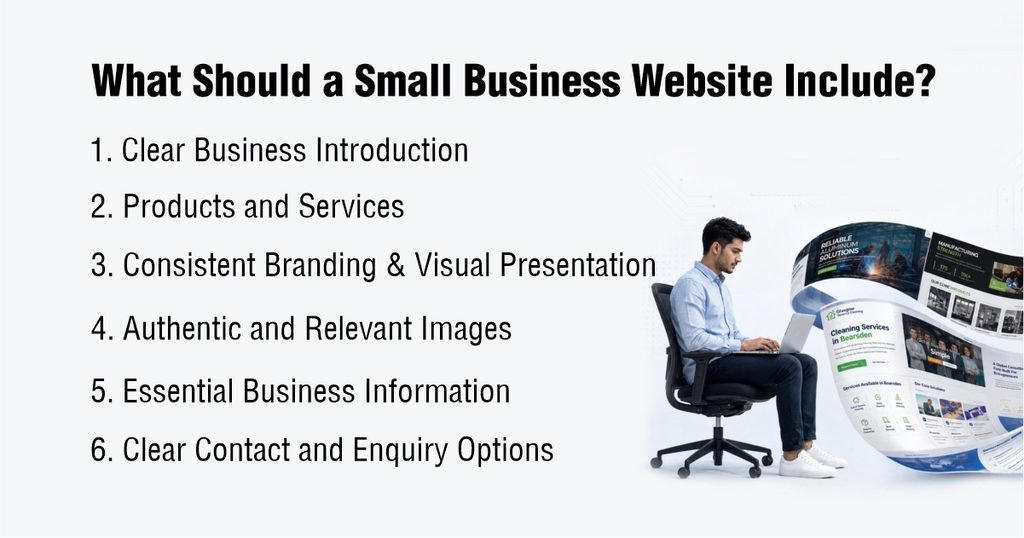
What Should a Small Business Website Include?
A professional business website brings together three important elements: design, content and functionality. Each plays a role in creating a useful experience for visitors.
1. Clear Business Introduction
The website should begin with a concise introduction that explains the business, its purpose and what it offers. Visitors should be able to recognise the business and understand its main offering without reading lengthy descriptions.
A clear heading, a short introduction and relevant supporting information can establish this context from the beginning.
2. Products and Services
The main products or services should be presented clearly. Use concise descriptions to explain what the business offers and include relevant photographs or visuals wherever they help visitors understand the offering.
For example, a home-based bakery may showcase its cakes and other products, while a consultant may highlight the professional services offered.
The information should focus on what potential customers need to know when considering the business.
3. Consistent Branding and Visual Presentation
A website should reflect the business’s identity through its logo, colours, typography and overall visual style.
Consistent branding helps create a recognisable appearance and presents the business more professionally. Maintaining the same identity across the website and social media platforms also helps customers recognise the business wherever they encounter it.
Consistent branding and social media visibility help businesses maintain a recognisable identity across their digital channels.
4. Authentic and Relevant Images
Photographs and visuals should help visitors understand the actual business. Product images, photographs of completed work, business premises, or relevant service-related visuals can make the website more informative.
Where possible, authentic business photographs are preferable to generic images that may not represent the business accurately.
5. Essential Business Information
Visitors should be able to find important details without difficulty. Depending on the business, these may include:
- Business location or service areas.
- Phone number and email address.
- Working hours.
- Delivery or service information.
- Other relevant business details.
Accurate and consistent information helps visitors understand how the business operates and whether it meets their requirements.
6. Clear Contact and Enquiry Options
A website should make it easy for interested visitors to take the next step. Contact details and enquiry options should be clearly presented rather than hidden at the bottom of the page.
For businesses that regularly communicate through WhatsApp, a WhatsApp contact option can provide a convenient way for visitors to ask questions, request information or make enquiries directly.
The objective is simple: once visitors understand what the business offers, they should know exactly how to connect with it.
Why Responsive Website Design Matters

A business website should work comfortably across different devices. Many people use smartphones to search for products, services and local businesses, making mobile usability an essential part of website design.
Responsive Website Design ensures that a website adjusts its layout to suit different screen sizes, including desktops, tablets and mobile phones.
A mobile-friendly website should provide:
- Readable text without requiring excessive zooming.
- Images that adjust properly to smaller screens.
- Organised sections and appropriate spacing.
- Buttons that are easy to tap.
- Contact information that is easy to locate.
- Links and enquiry options that work correctly.
Mobile usability should be considered from the beginning of the design process. A website that looks good on a desktop but is difficult to use on a phone may create an unnecessary barrier for potential customers.
A consistent and convenient experience across devices helps visitors access business information wherever they are.
How a Website Helps Build Business Credibility
A website often creates one of the first impressions a potential customer has of a business. Its presentation and the information it provides can influence how visitors perceive the business.
An organised layout, consistent branding, relevant images and accurate information help establish a professional impression.
For small businesses that are still building their online identity, this can be particularly valuable. A website provides a dedicated space to explain the business, present its offerings and communicate what customers can expect.
Where appropriate, genuine customer feedback, relevant qualifications, examples of completed work or other supporting information can add further context and credibility.
However, a professional website does not need exaggerated claims or unnecessary design elements. Clear communication, authentic information and consistency are more important than decoration.
Keeping contact details, service information, and other content accurate also helps maintain a dependable online representation of the business.
Making the Website Easy to Use and Navigate
A website should not only look professional; visitors should also be able to use it without difficulty.
The information should follow a logical order, with clear headings and sections that help visitors understand the business. Important details, such as products, services, and contact options, should be easy to find.
This is particularly important for a single-page website, where visitors may access all the essential information by scrolling through the page.
A good website experience should also consider the customer’s next step. Someone interested in a product may want to ask a question, while someone looking for a service may want to request further information.
Clear calls-to-action, accessible contact details, and working links help connect the information on the website with these actions.
A Practical Website Starting Point for Small Businesses

Many small businesses know they need a website but may not require a complex digital platform at their current stage. Their immediate need may simply be a professional place online where customers can learn about the business, explore its offerings, and make contact.
A focused website can address this requirement without introducing unnecessary pages or features. It brings the essential information together in one accessible place and gives the business a dedicated online identity.
As the business grows, its digital requirements may also change. It may later need stronger social media visibility, improved local discovery or additional digital marketing activities. Businesses can then explore VISIVA’s other digital solutions to strengthen their visibility and online discovery.
Starting with the right website foundation makes it easier to build on that presence as new requirements emerge.
This is the practical thinking behind Website Design for Small Businesses: understand what the business needs to communicate, prioritise the essentials and create a website that serves its purpose effectively.
Establish Your Business Online with VISIVA PRESENCE
For small businesses looking to establish a professional online identity, VISIVA Digital offers PRESENCE – Be Online, a focused website solution designed around essential business requirements.
VISIVA PRESENCE helps businesses establish their online presence through professionally designed, mobile-responsive single-page websites or landing pages. The website is organised around the business’s identity, products or services, relevant information and convenient contact options.
The focus is on providing the essentials:
- A professional presentation of your business.
- Clear and organised information about your offerings.
- Relevant visuals and consistent branding.
- Mobile-friendly website design.
- Convenient contact options, including WhatsApp where appropriate.
Rather than making the process unnecessarily complicated, VISIVA focuses on helping small businesses get online professionally with a website suited to their current requirements.
As your business develops, you can explore additional services such as social media visibility and local discovery through VISIVA’s other solutions.
Explore VISIVA PRESENCE – Professional Website Solutions for Small Businesses and take the first step towards establishing your business online.
Frequently Asked Questions

1. What should a small business website include?
A small business website should introduce the business, explain its main products or services, provide relevant images and essential business information, and offer convenient ways for visitors to get in touch.
2. Does a small business need a multi-page website?
Not necessarily. Many small businesses can begin with a professionally designed single-page website or landing page that presents their essential information in an organised manner. The appropriate structure depends on the business’s requirements and the information its customers need.
3. Why is responsive website design important?
Responsive Website Design allows a website to adjust to different screen sizes, including smartphones, tablets and desktops. It helps visitors read information, view content and use contact options comfortably across devices.
4. How can a business website create a professional first impression?
Consistent branding, an organised layout, relevant photographs, clear descriptions and accurate business information help create a professional and credible online presentation.
5. Can customers contact a business directly through its website?
Yes. A website can include phone numbers, email links, enquiry options, and WhatsApp integration. These features make it easier for visitors to ask questions, request information, and connect with the business.
6. What are the benefits of professional website design services for small businesses?
Professional Website Design Services help small businesses establish a consistent online identity, present their offerings clearly, improve usability and make essential information accessible to potential customers. A well-planned website also provides a foundation for developing a broader digital presence as the business grows.